EARTH FRAME
Design Background
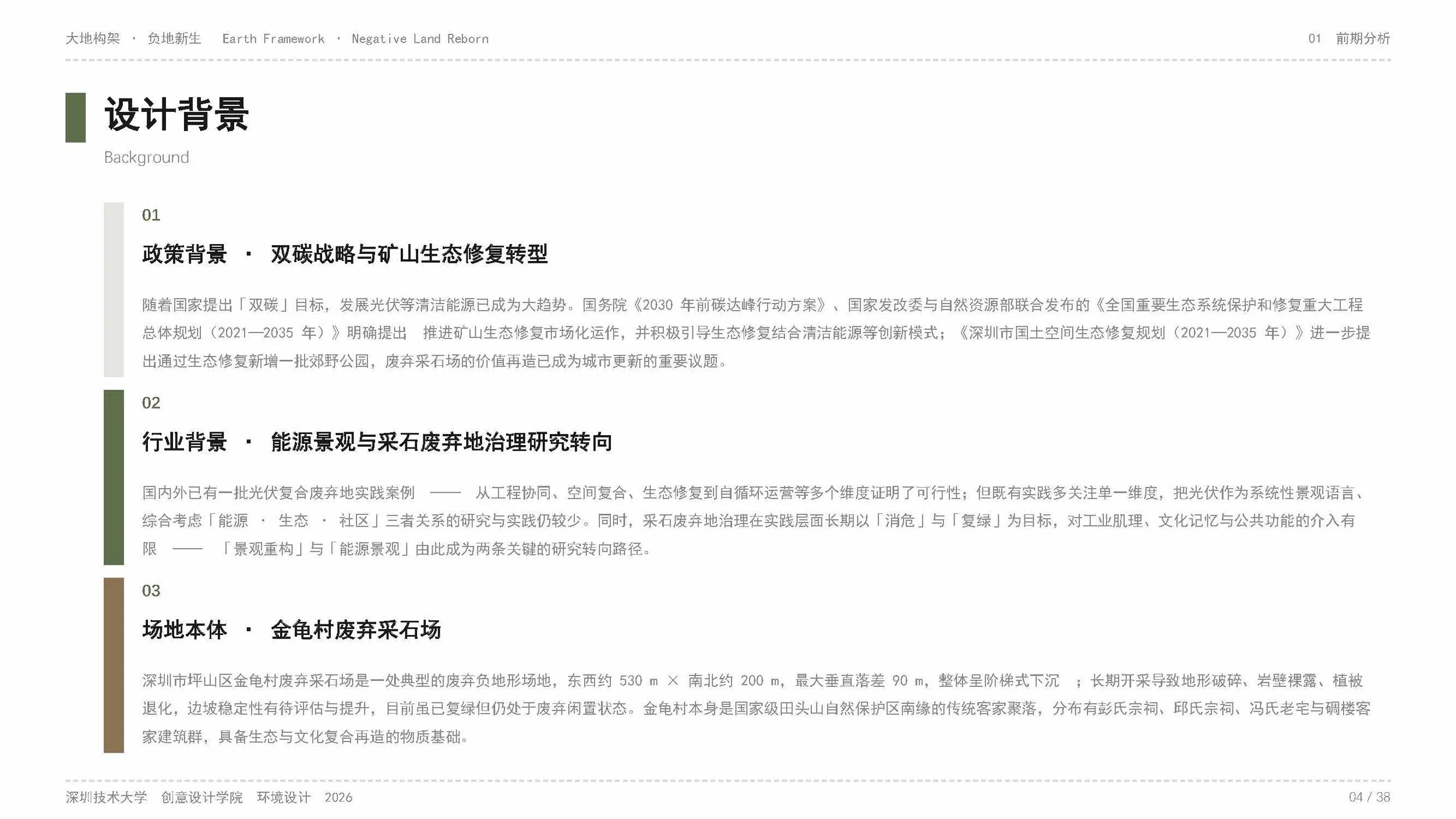
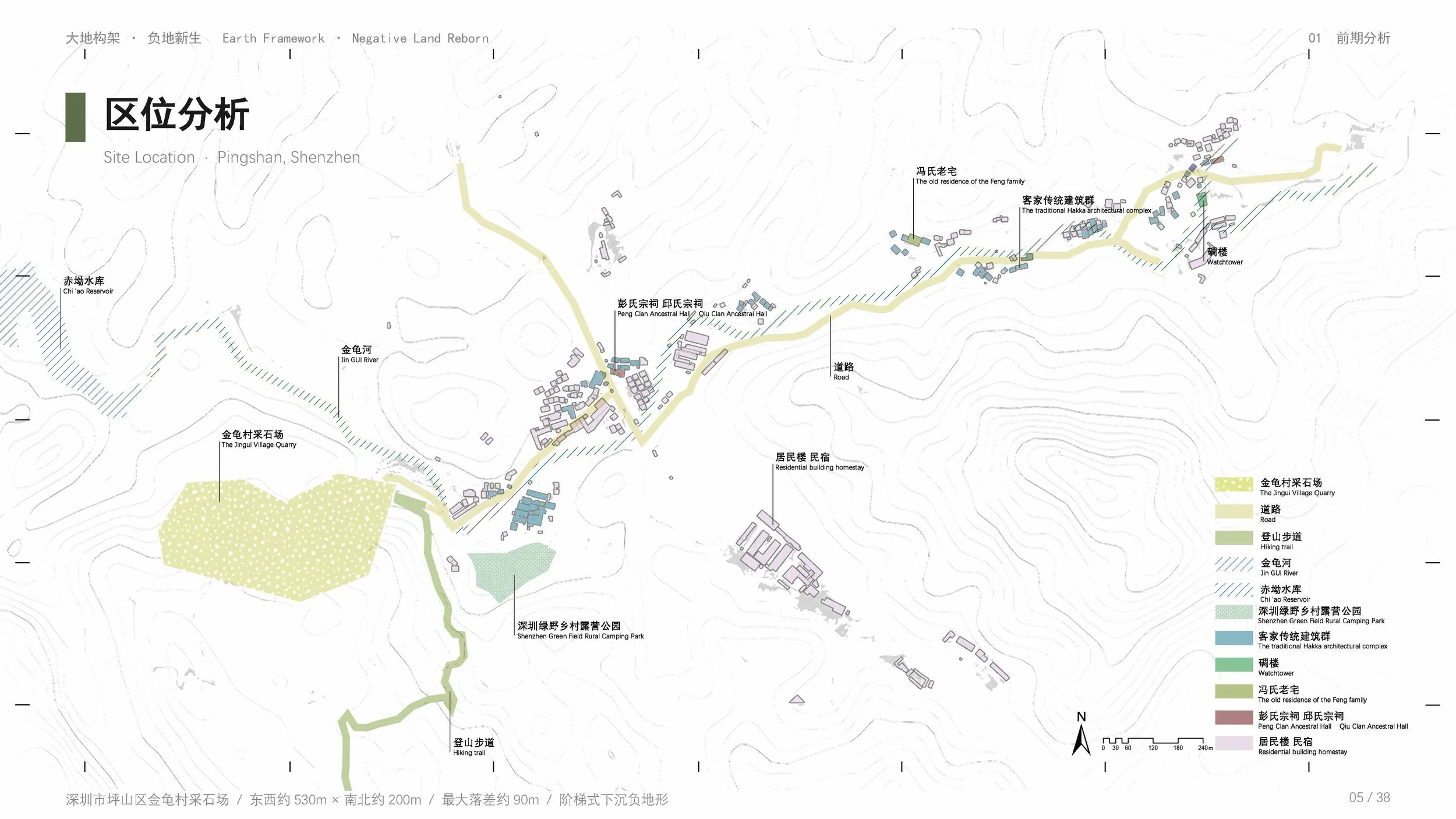
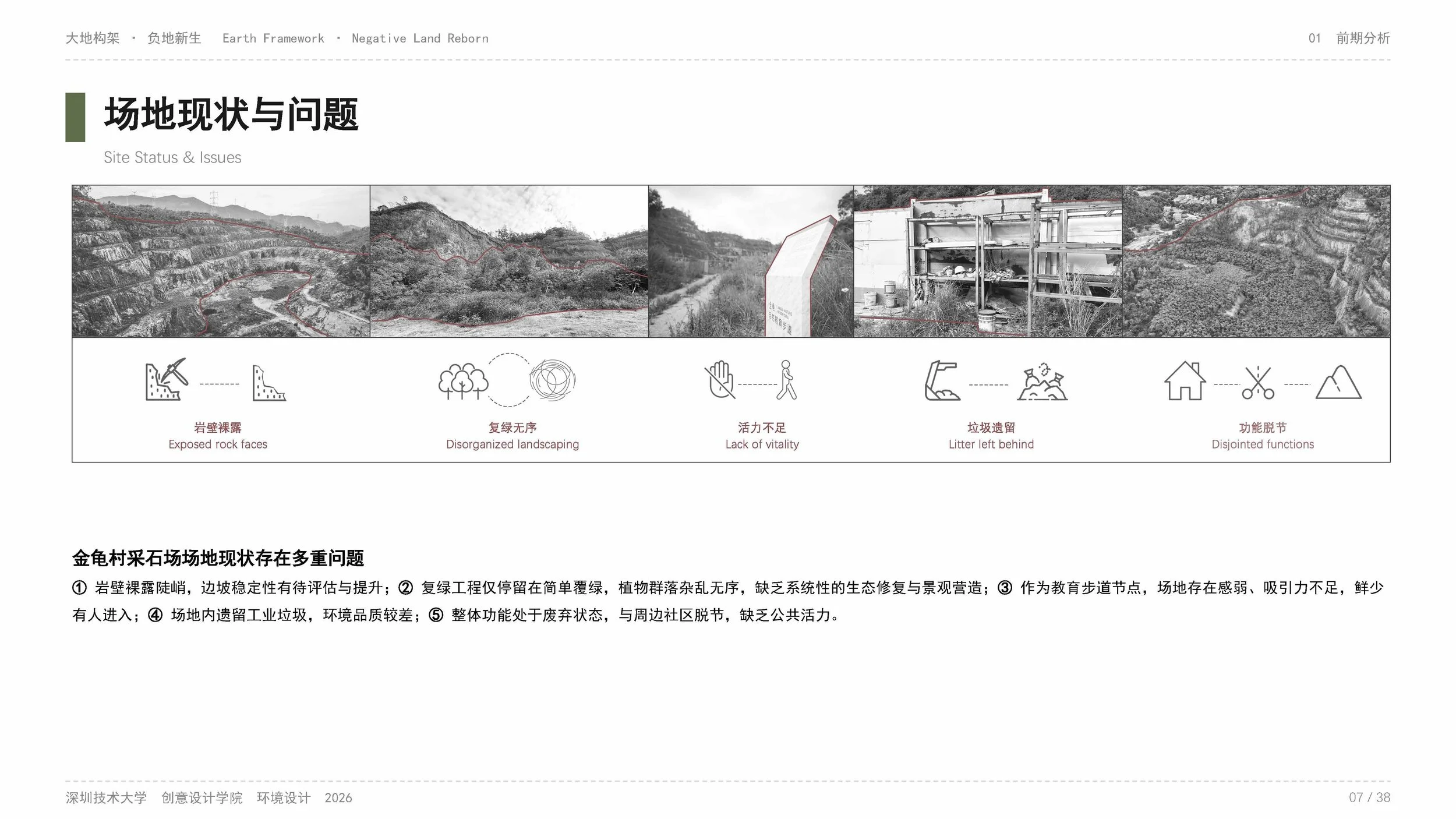
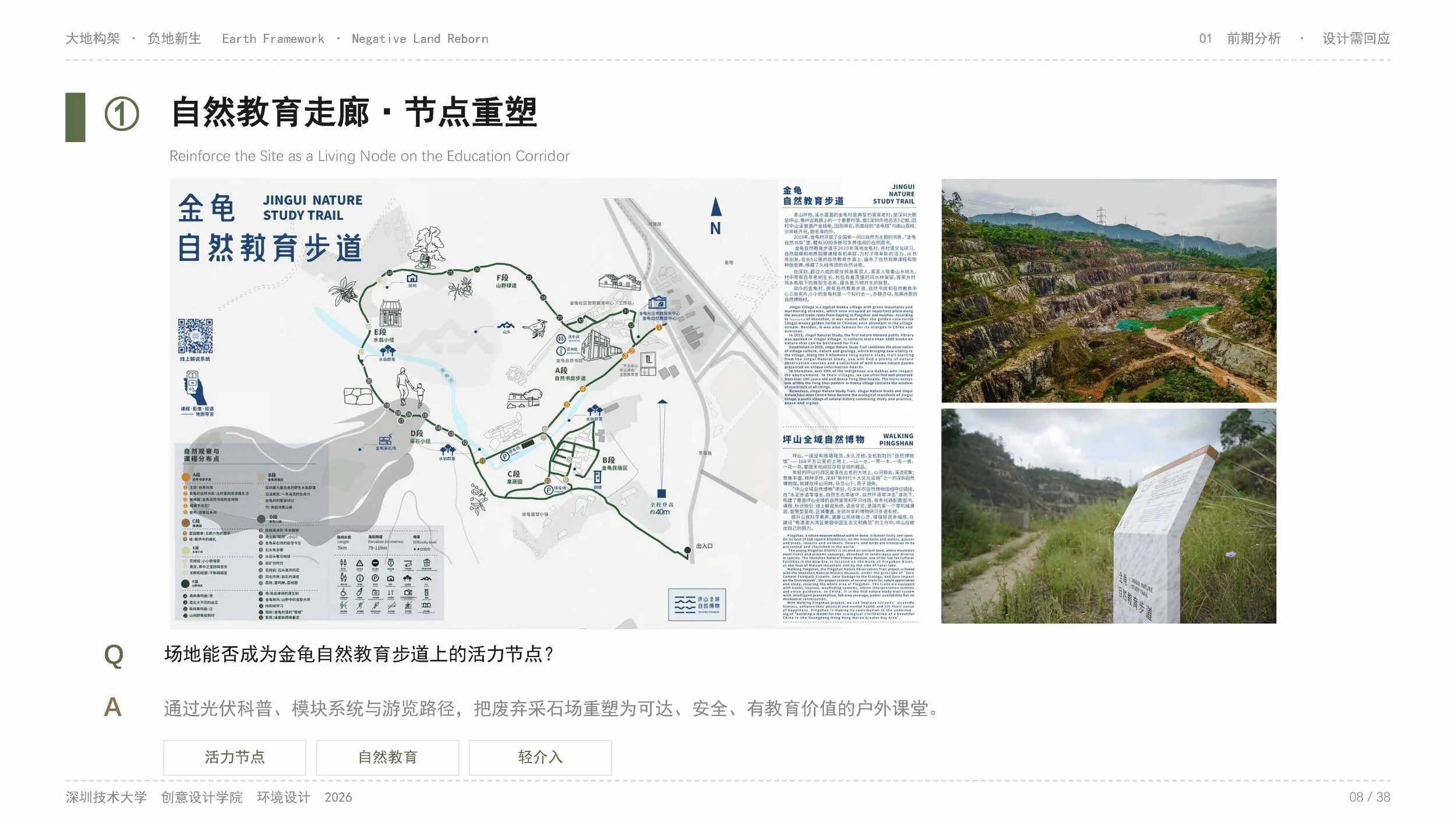
Driven by China's dual-carbon strategy, coupling mine ecological restoration with clean energy has become a key agenda of urban renewal. The abandoned quarry in Jingui Village, Pingshan, Shenzhen, is a typical negative landform — roughly 530 m by 200 m, with a 90 m vertical drop — where decades of extraction left fractured terrain, exposed rock faces, and degraded vegetation; though replanted, the site remains idle.
The surrounding Hakka settlement, with its ancestral halls and watchtowers, offers a material basis for ecological and cultural reinvention. Yet existing practices largely stop at hazard removal and re-greening, rarely engaging the industrial fabric or public life; a systemic integration of energy, ecology, and community remains to be explored.
Design Strategy
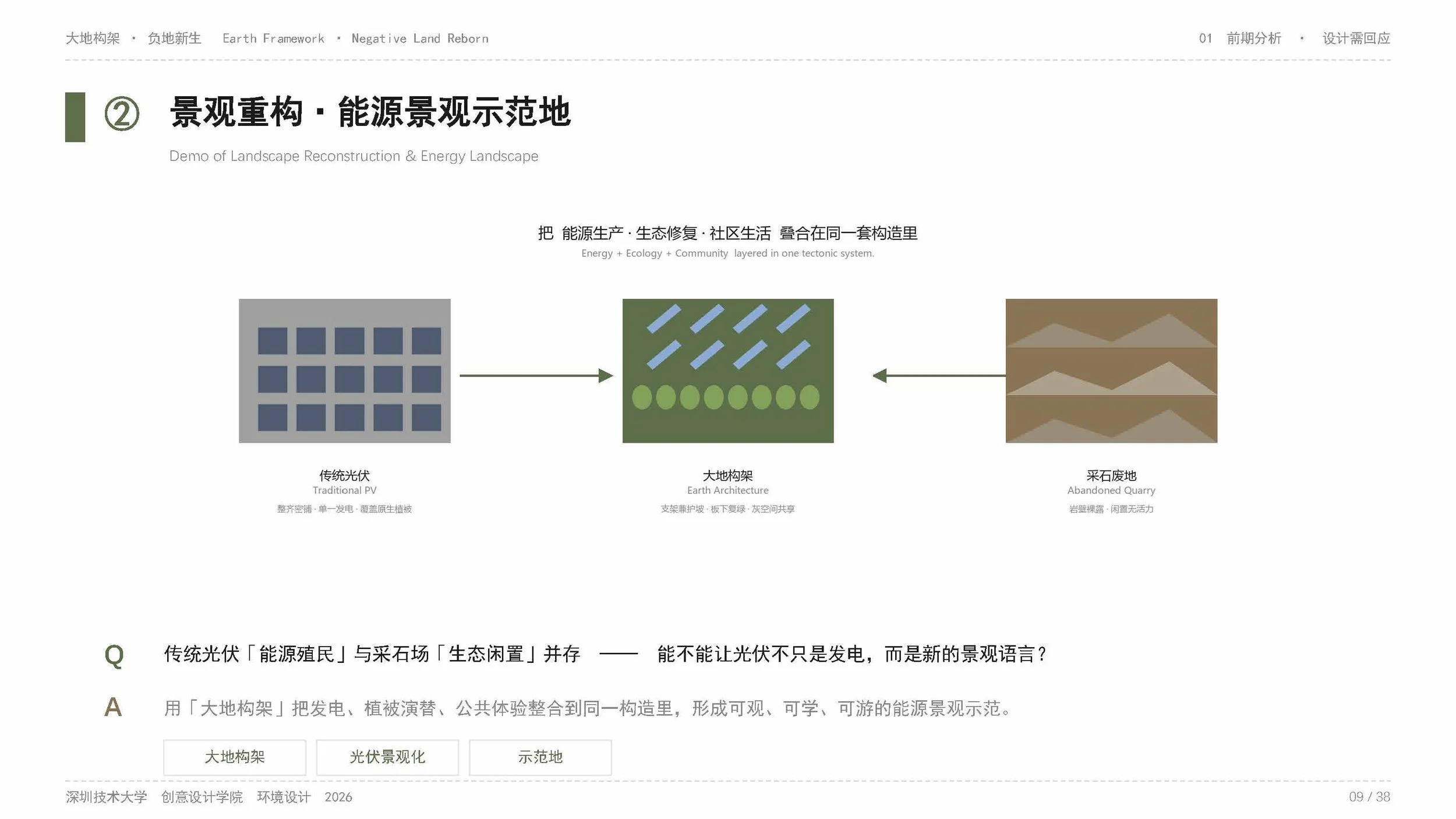
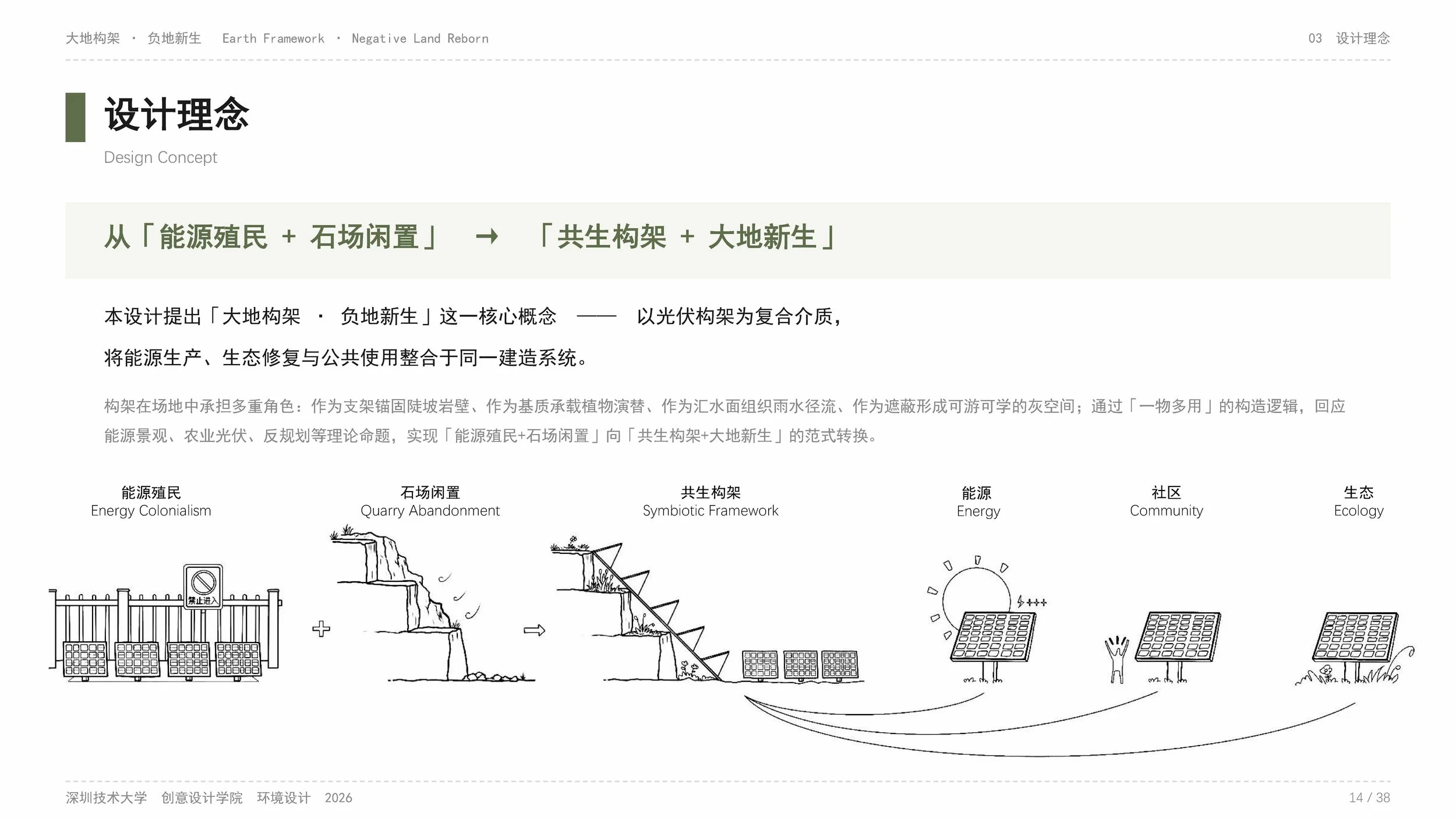
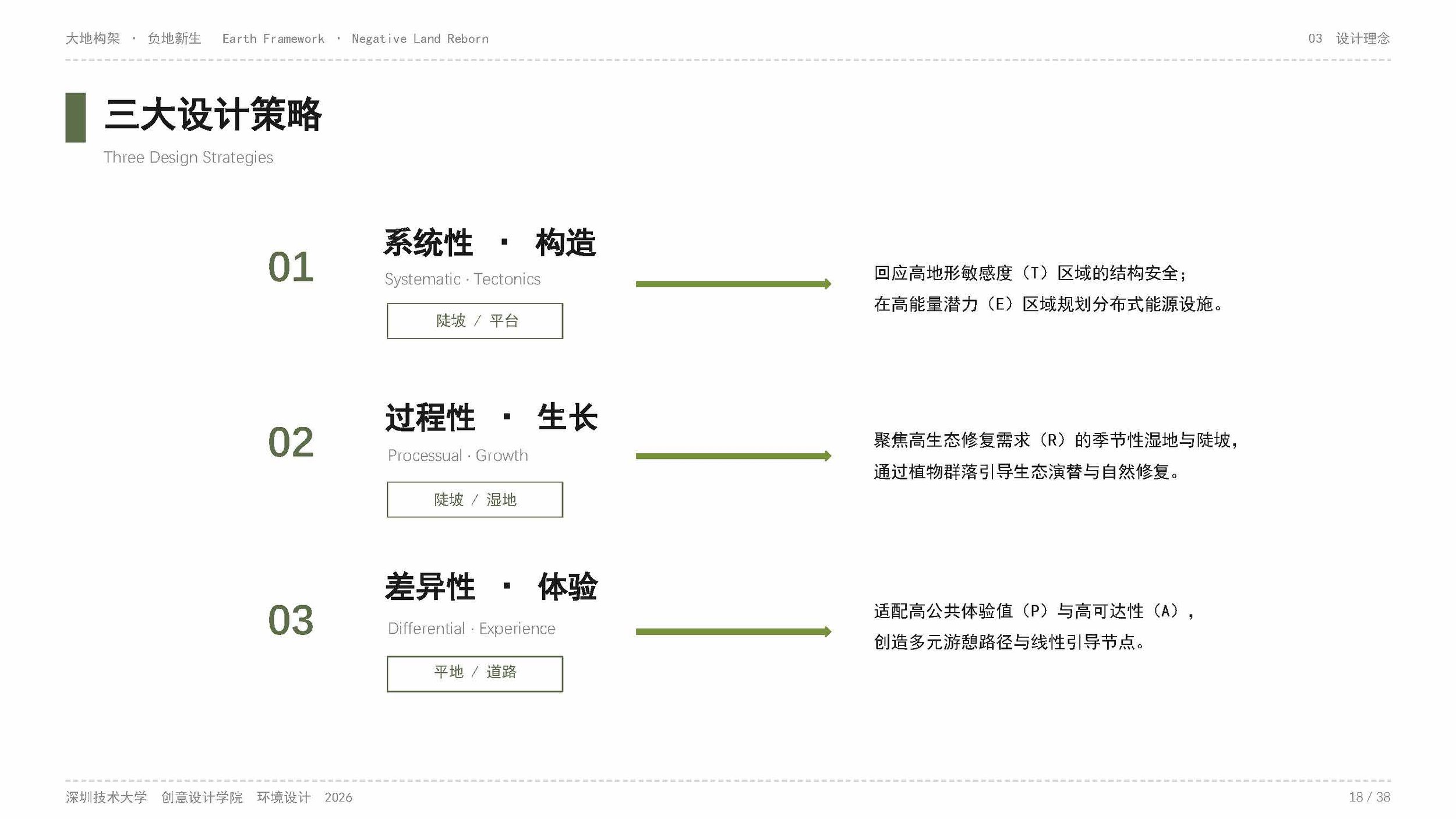
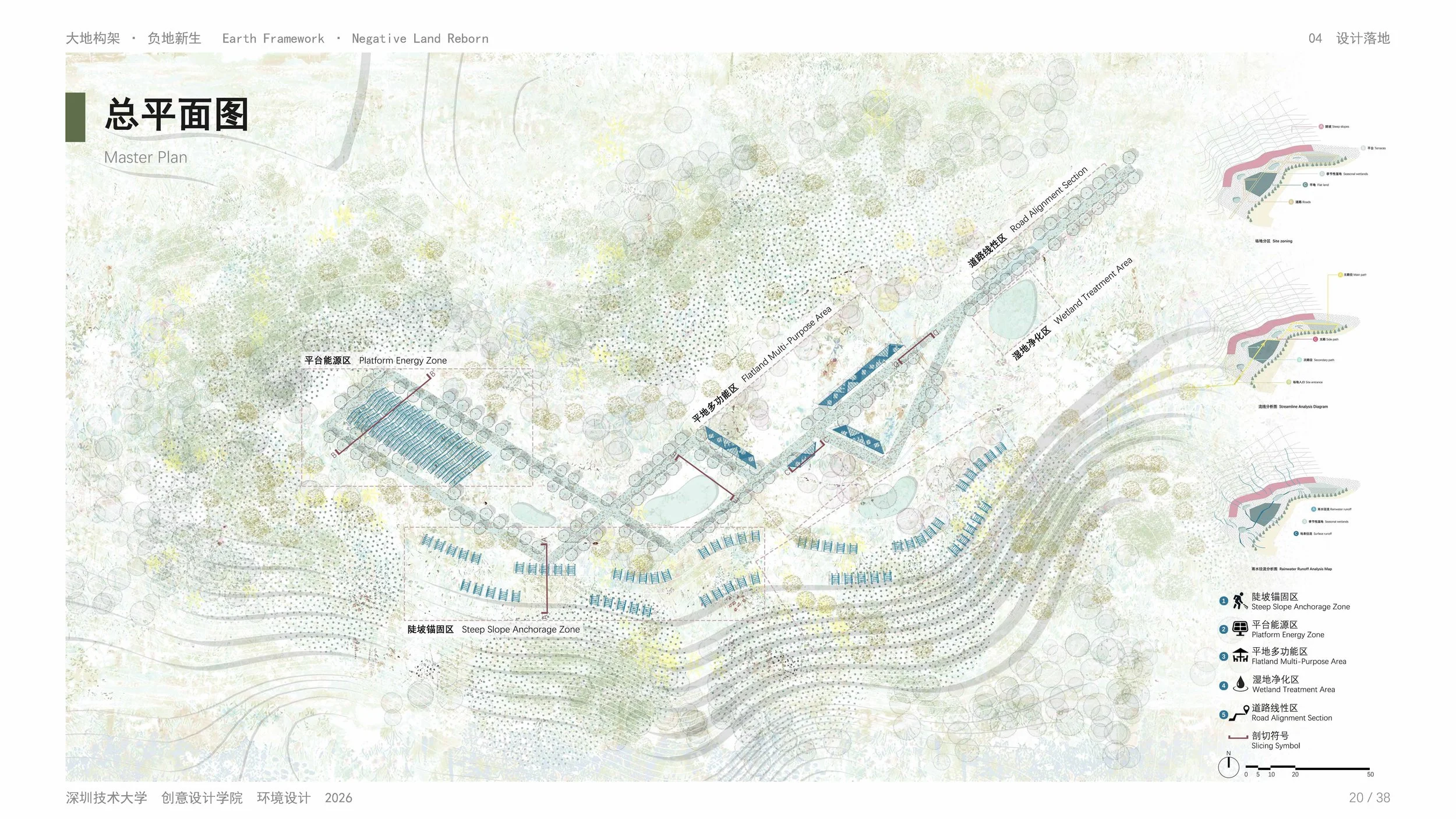
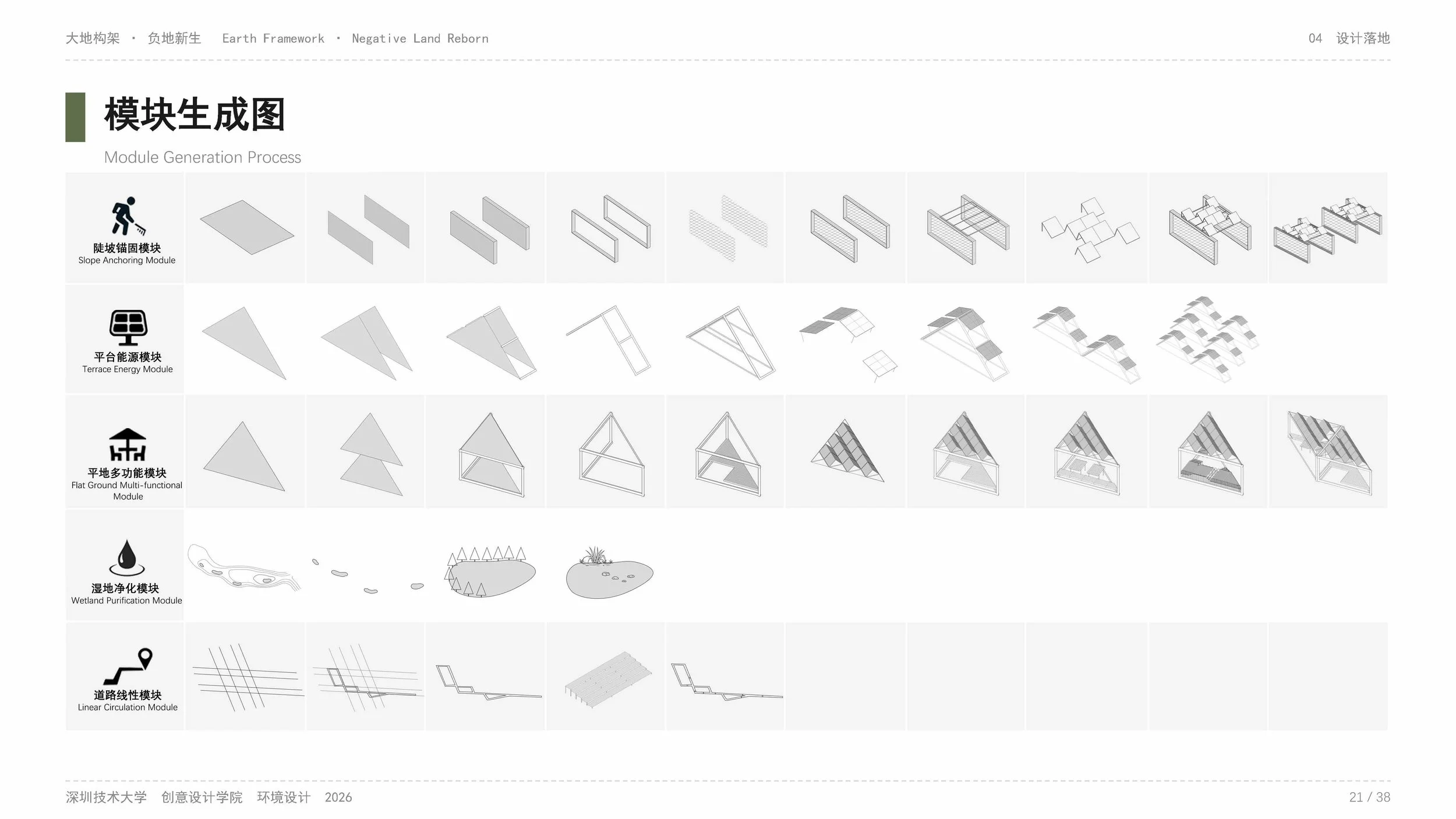
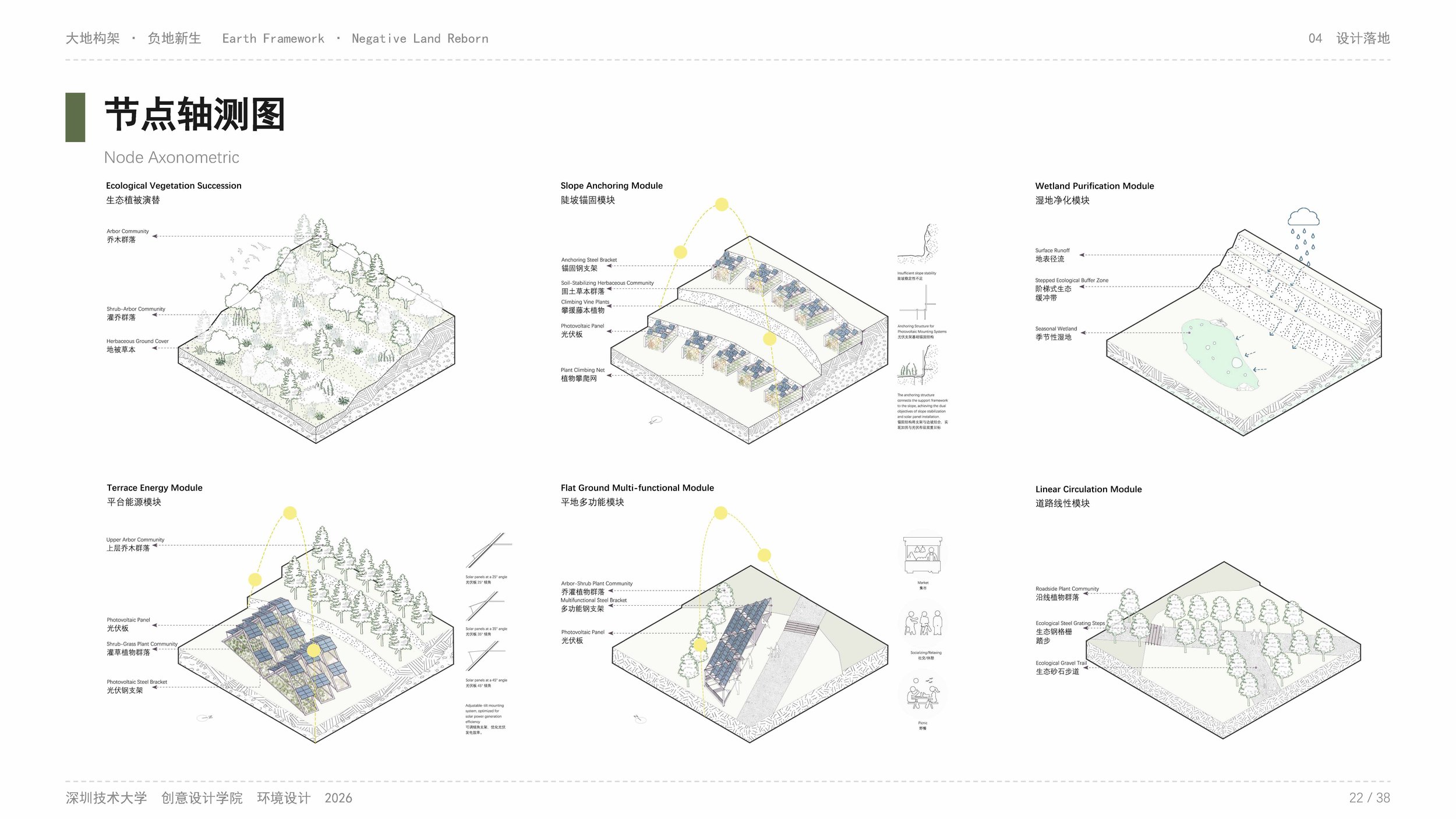
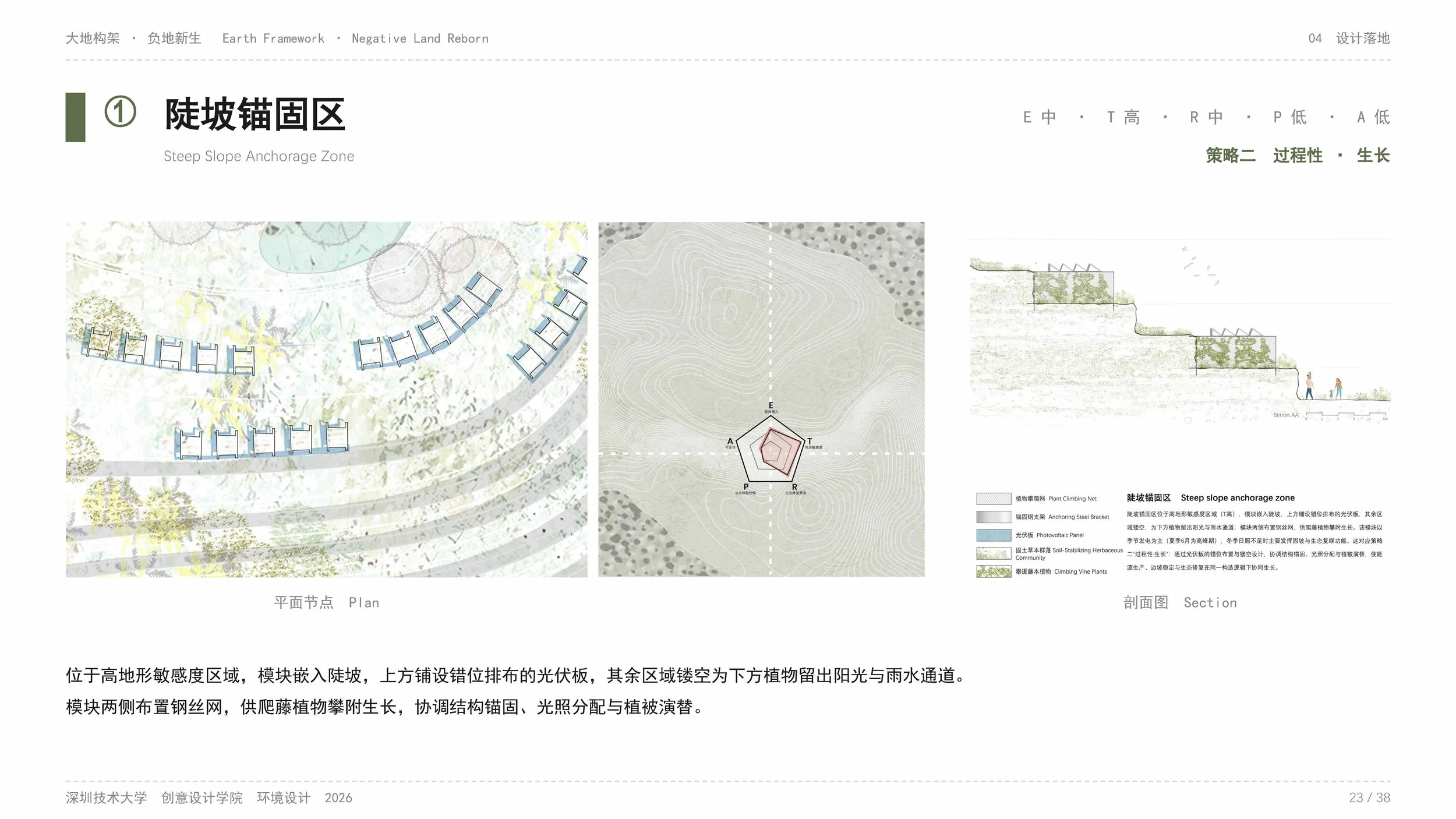
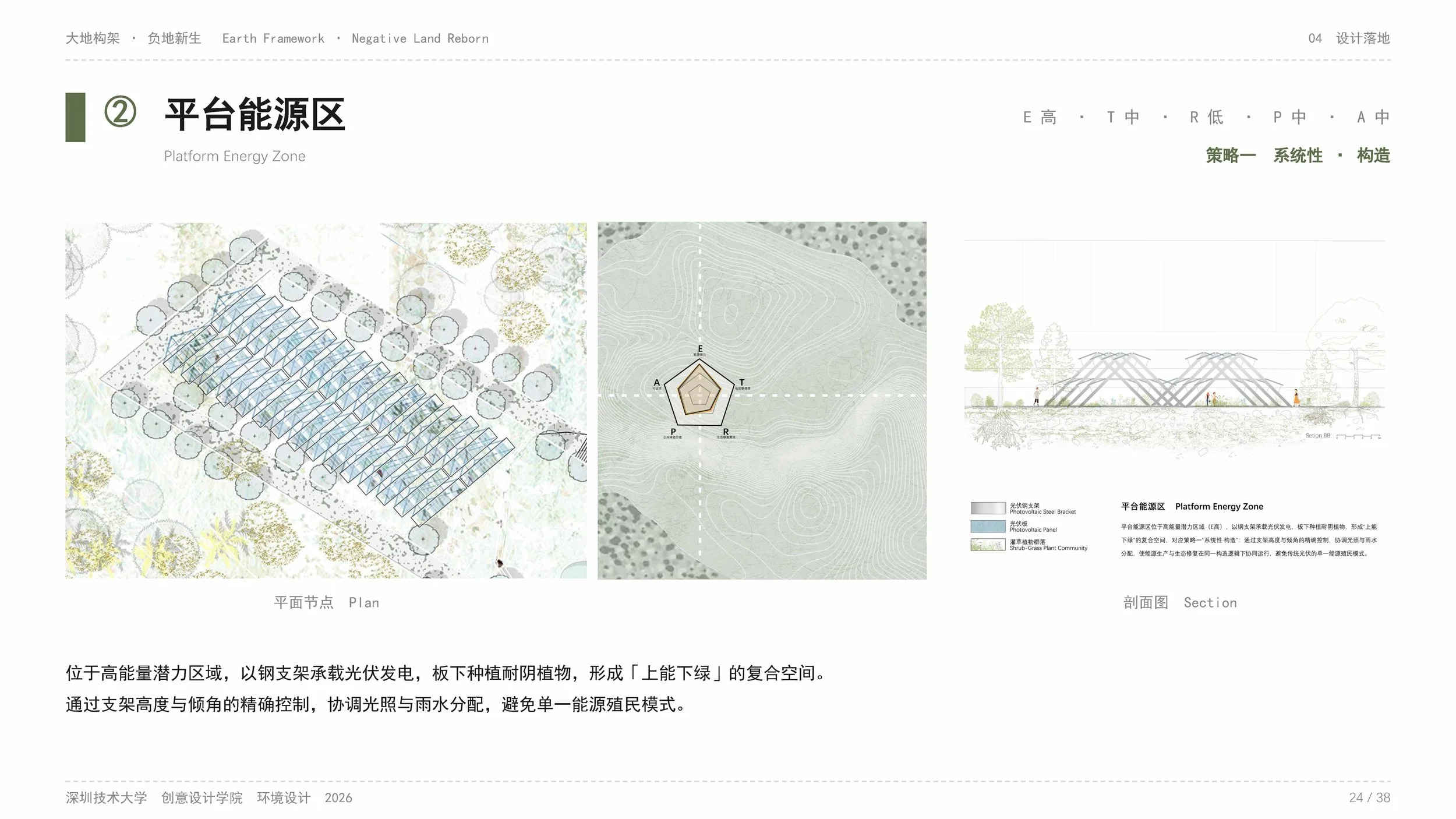
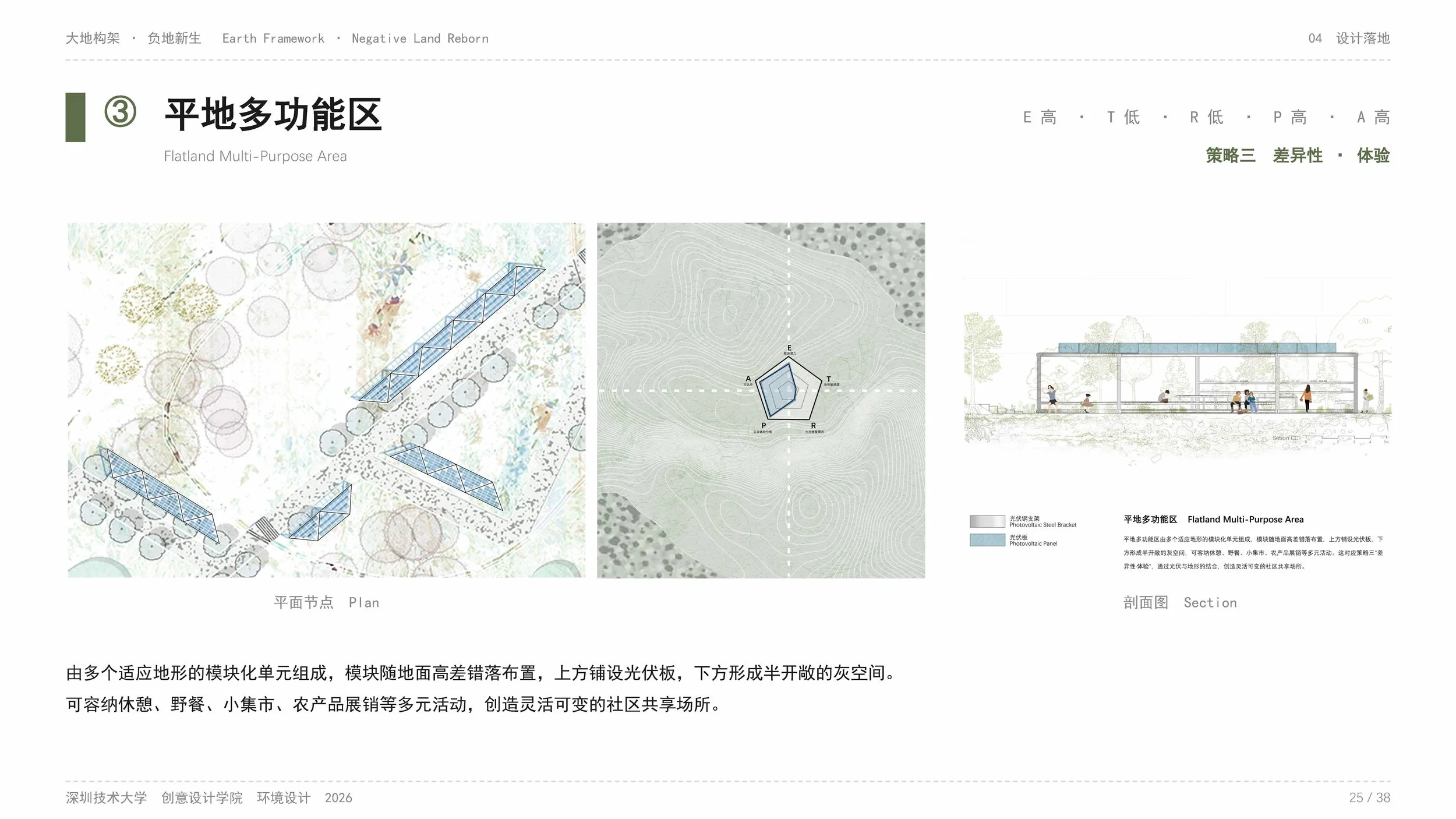
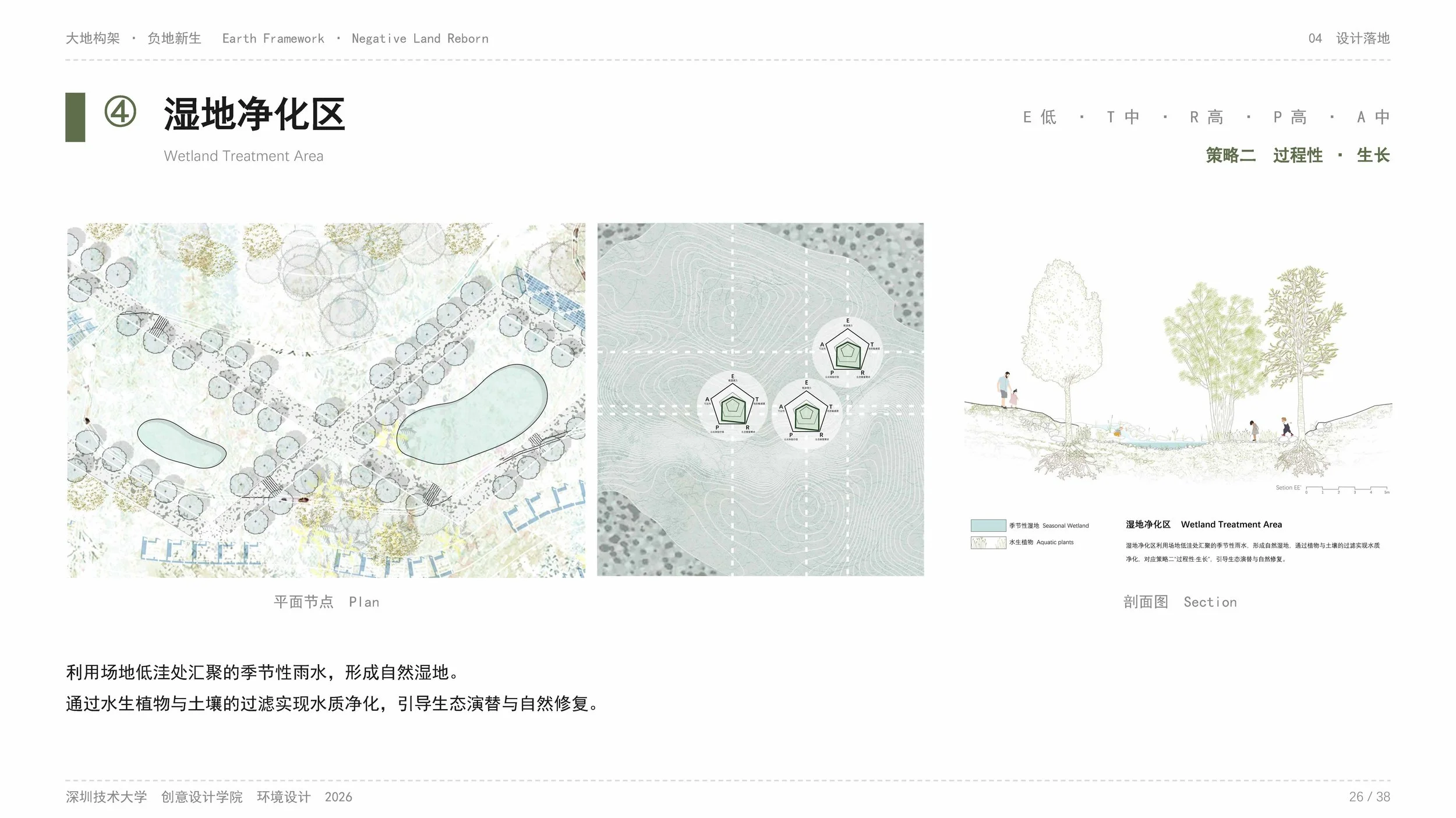
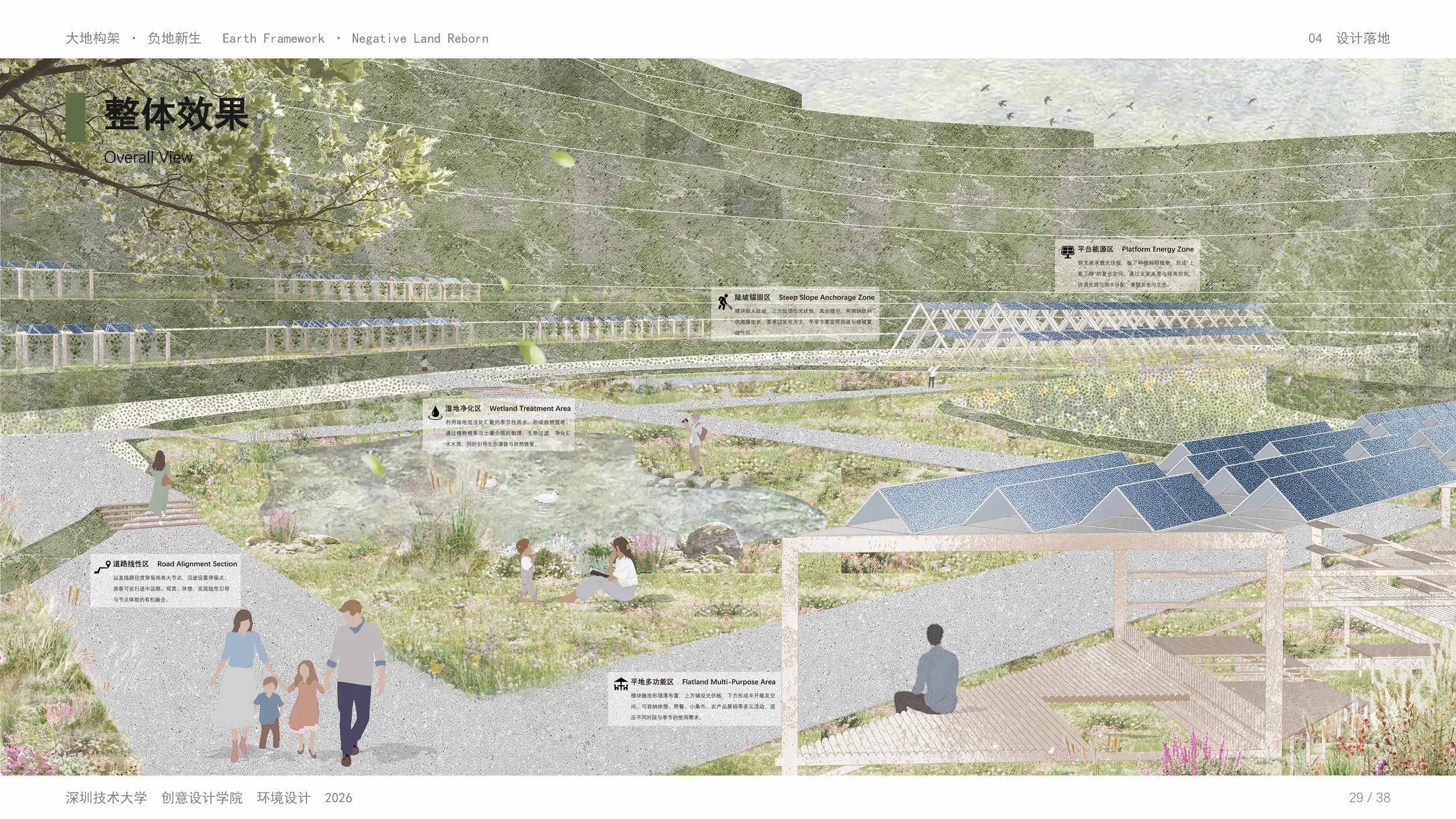
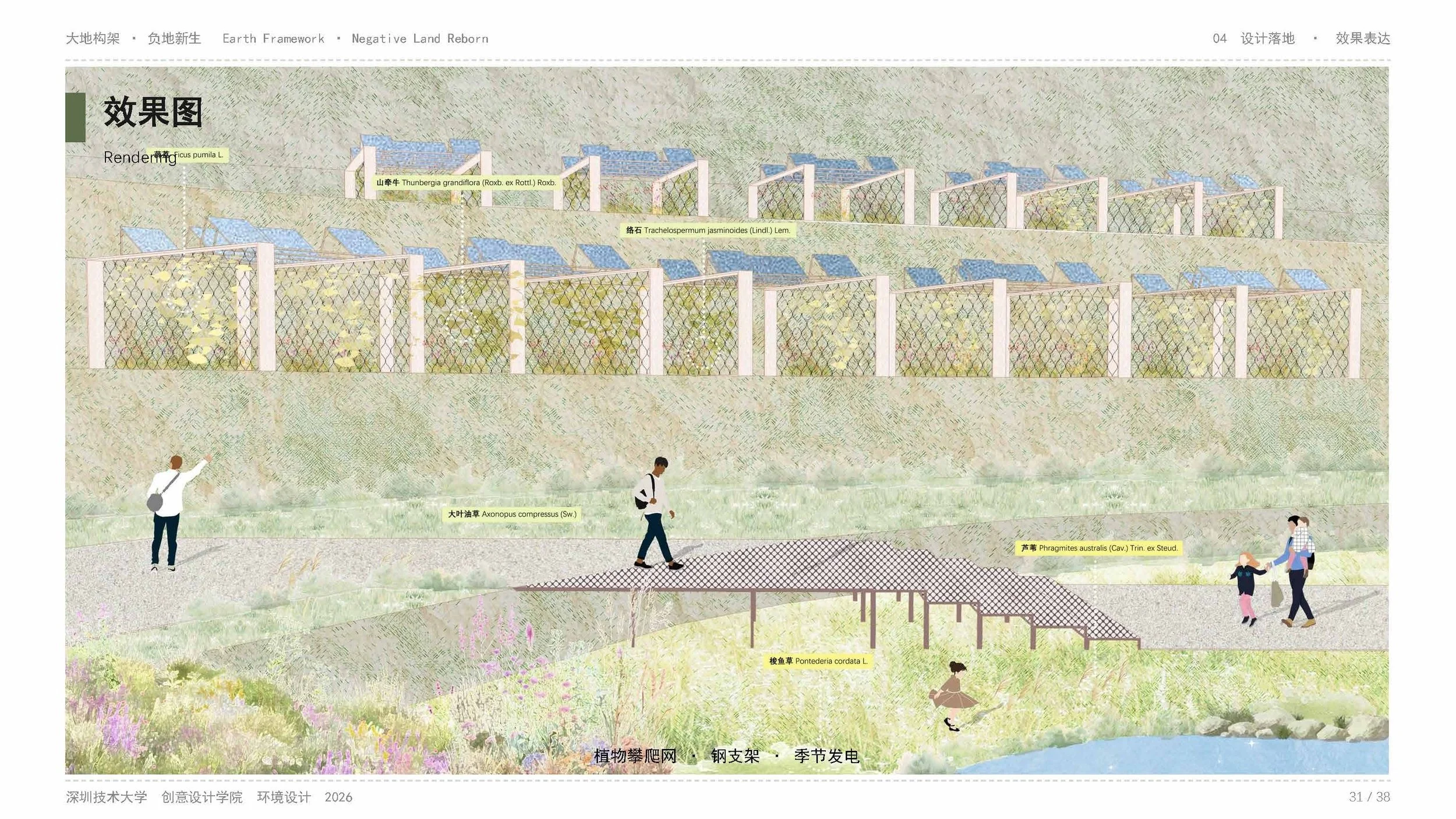
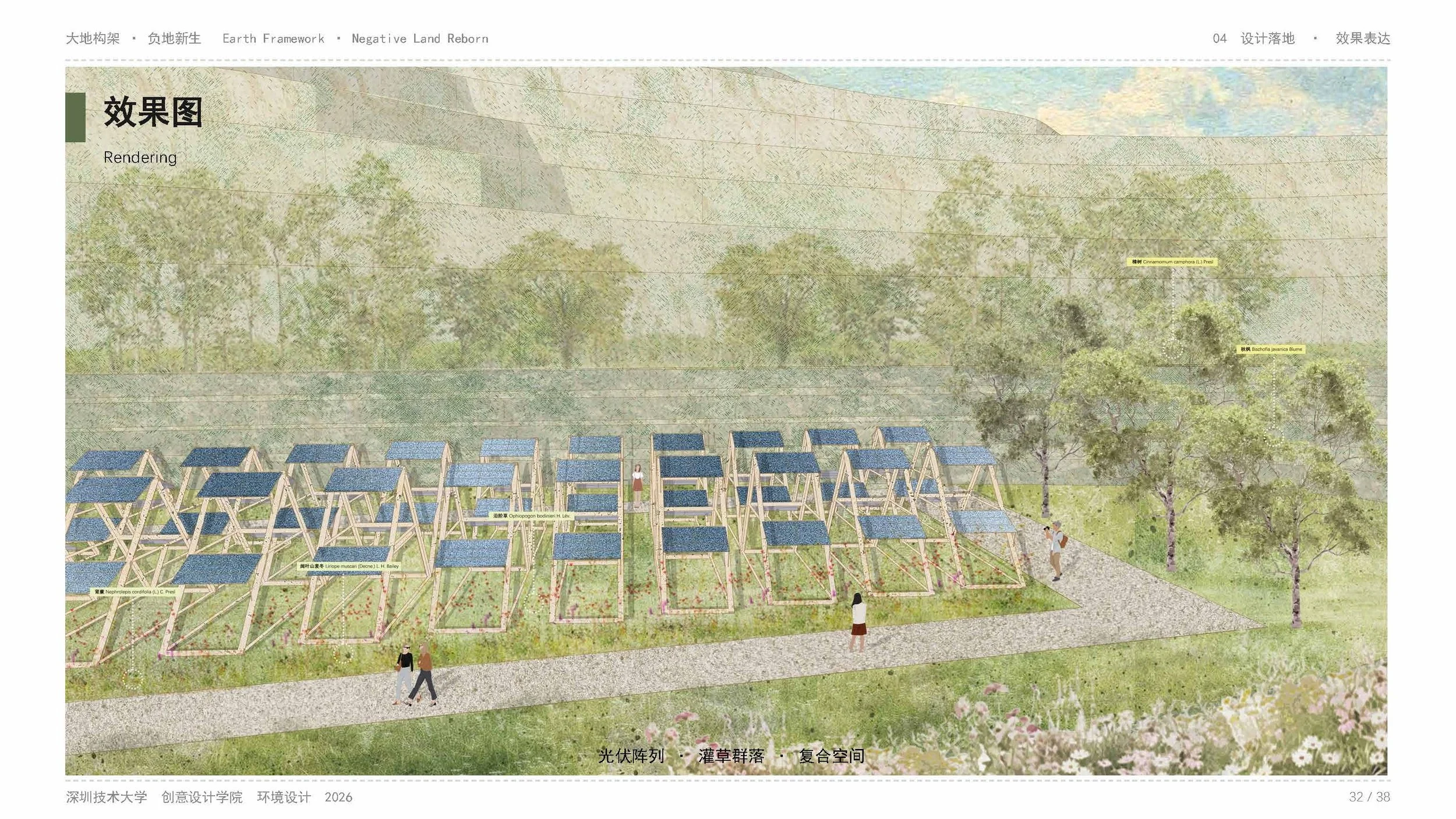
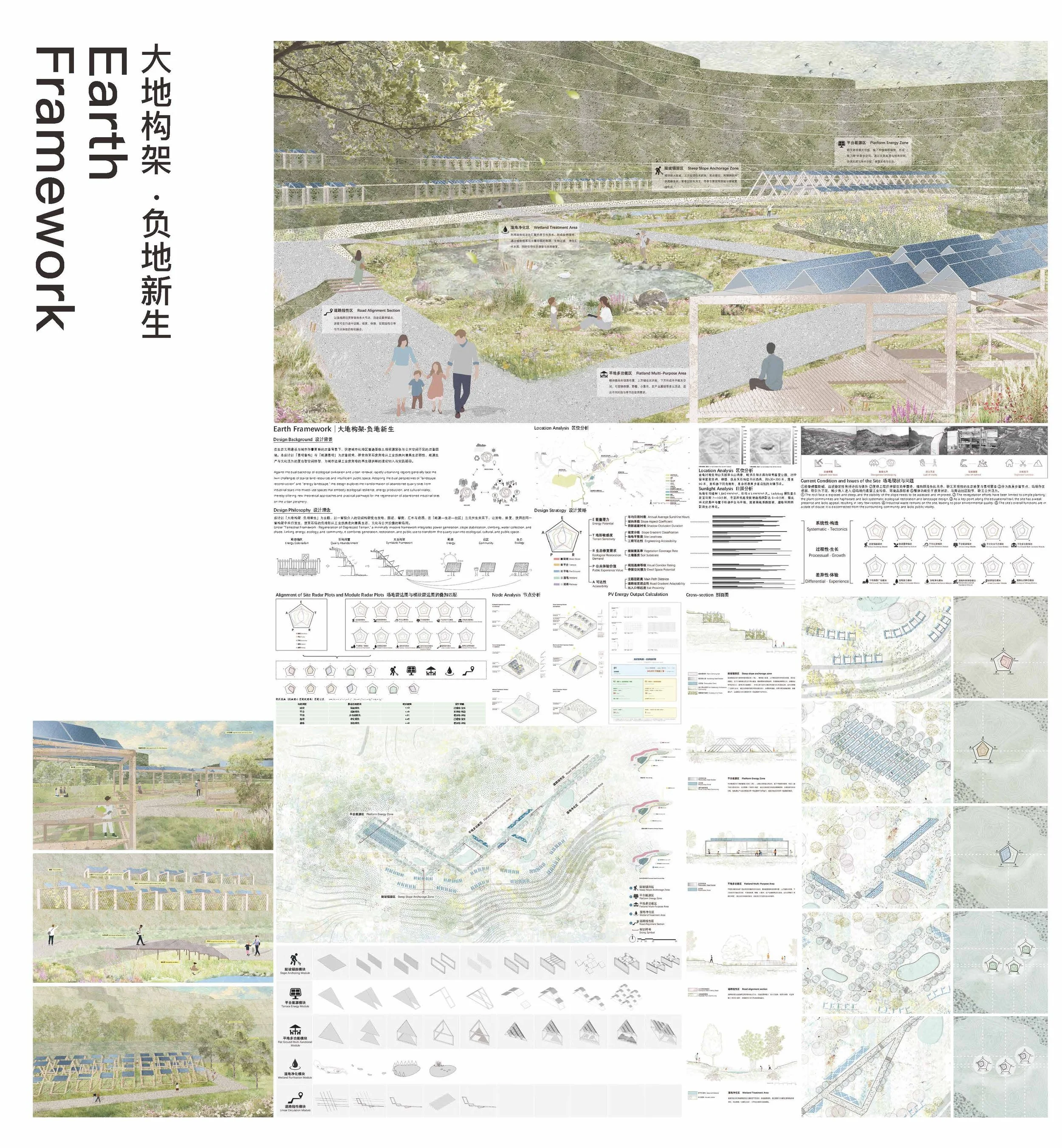
The design advances a core concept — Earth Framework · Negative Land Reborn — employing the photovoltaic framework as a composite medium that unites energy production, ecological restoration, and public use within a single construction system.
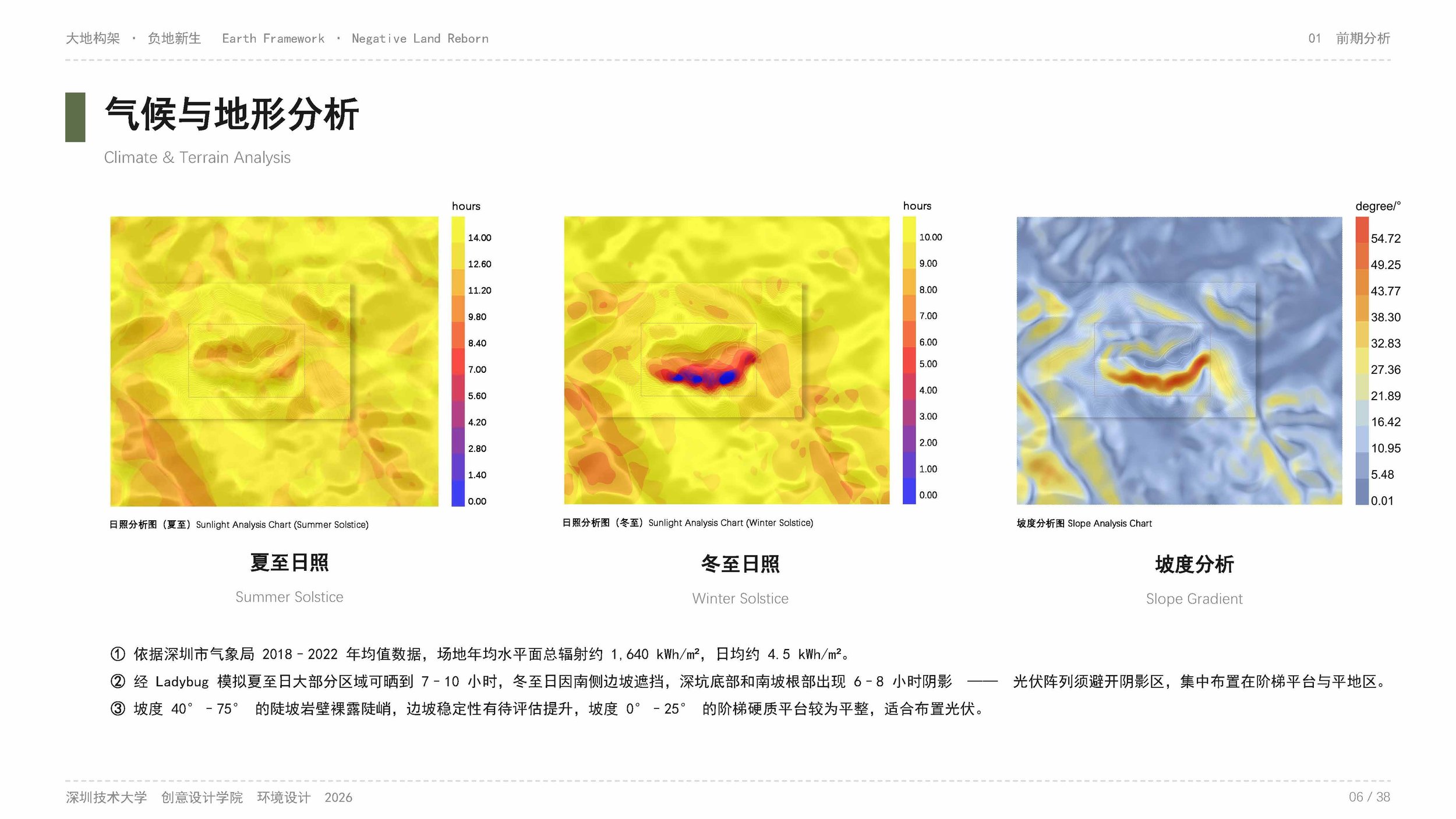
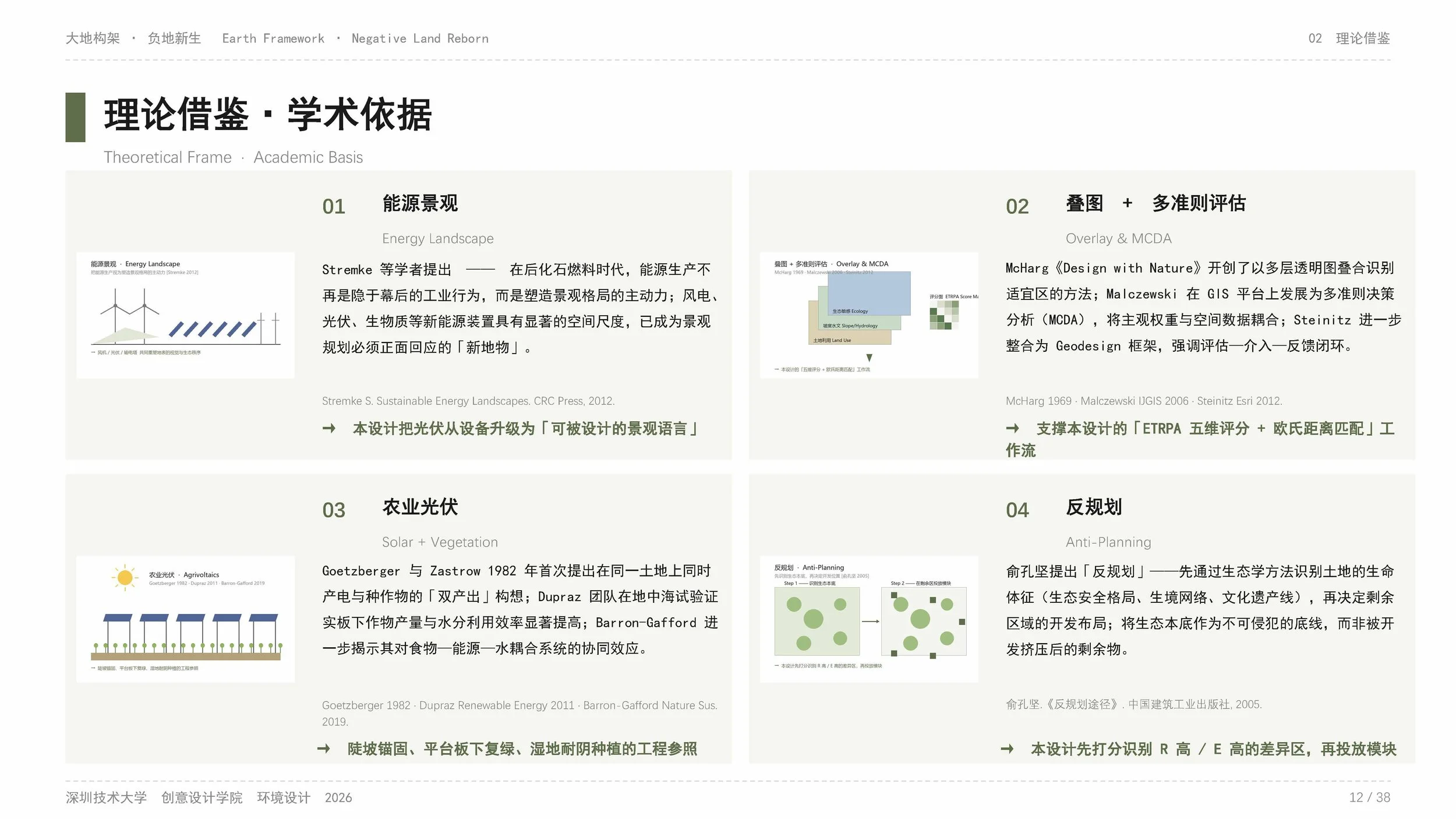
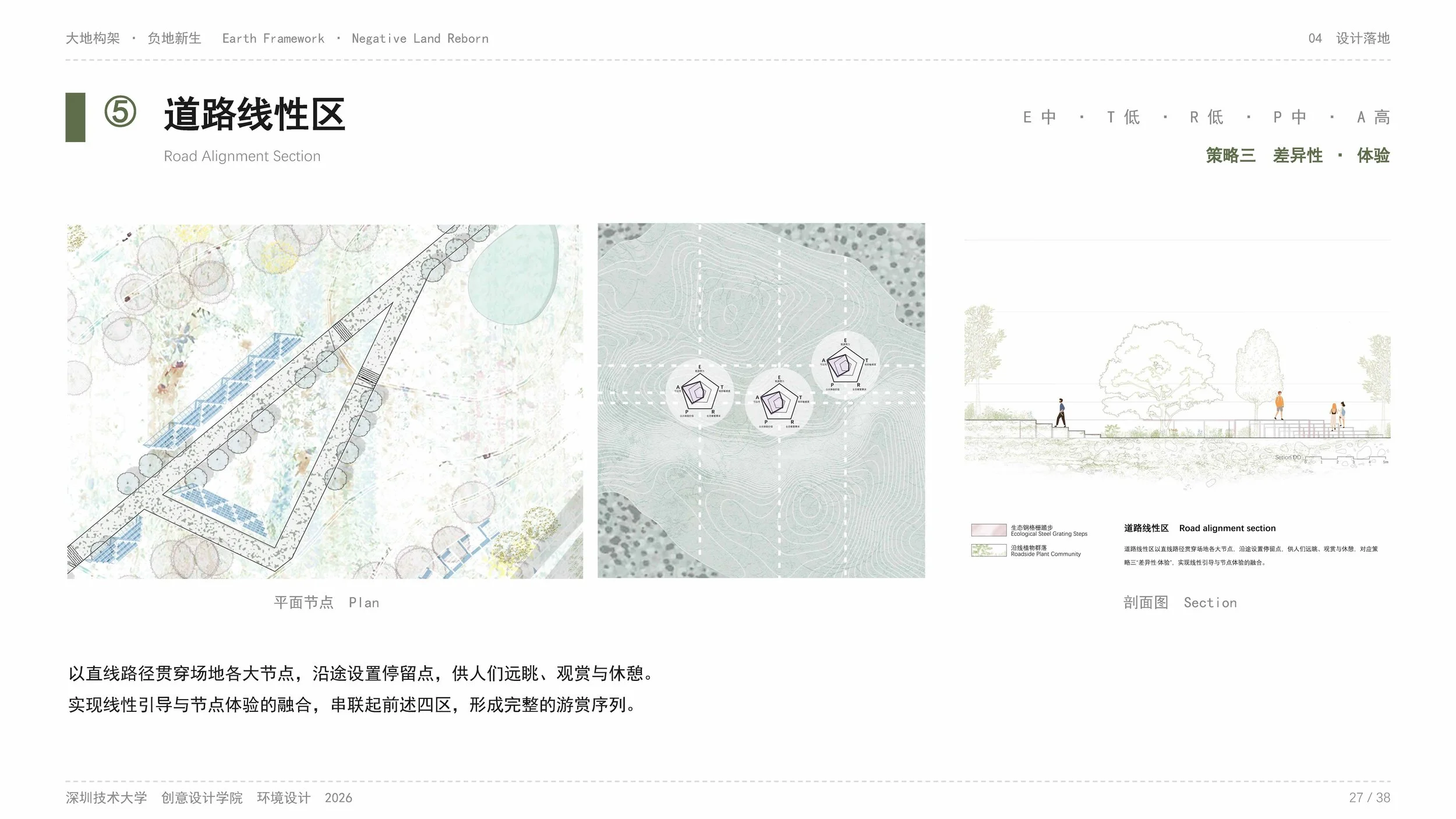
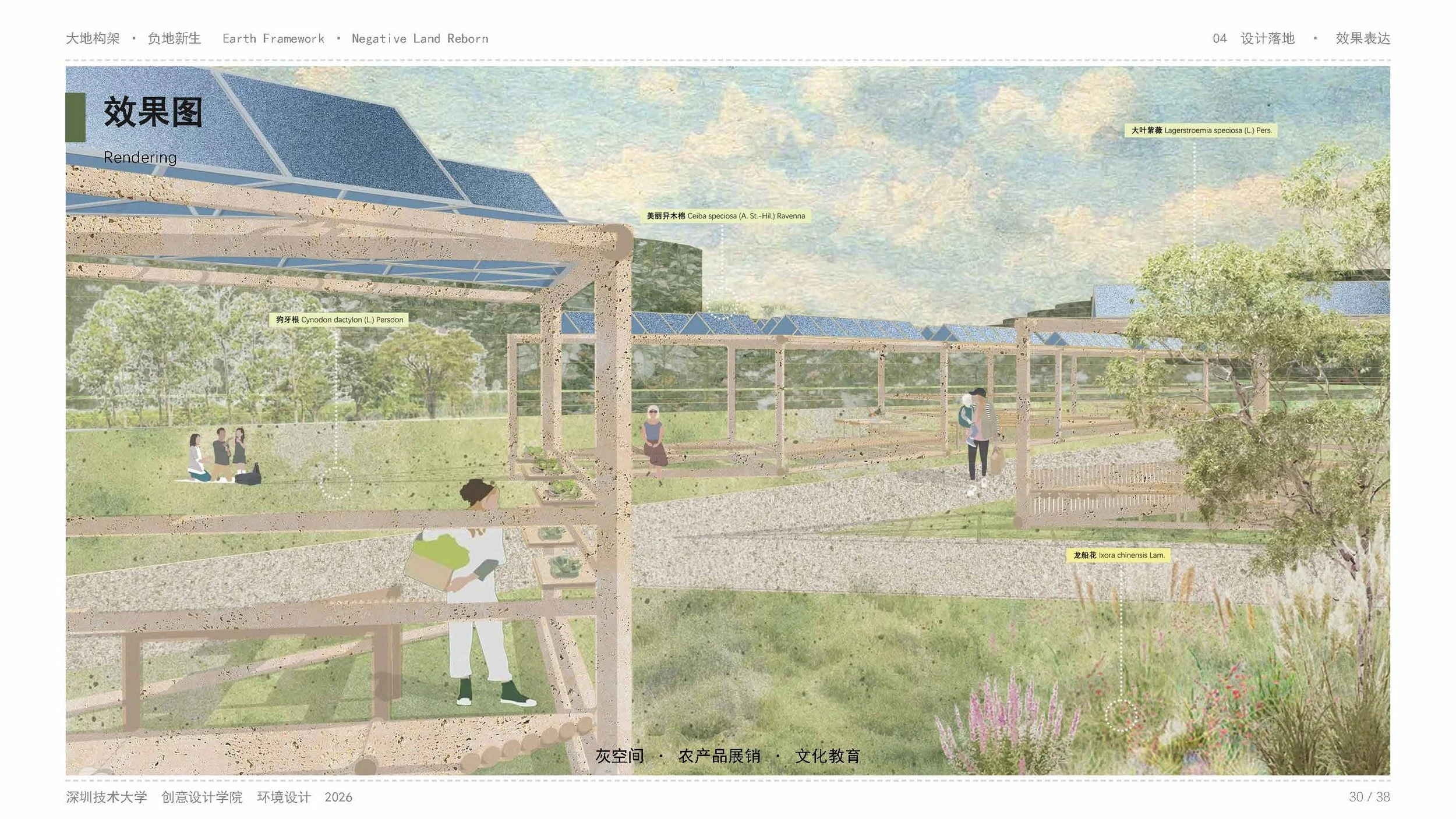
On site, the framework performs multiple roles: anchoring steep rock faces, supporting plant succession, channeling rainwater runoff, and shading in-between "grey spaces" open to roaming and learning. Through a "one structure, multiple uses" tectonic logic, the project engages theories of energy landscape, agrivoltaics, and anti-planning — achieving a paradigm shift from energy colonialism and quarry abandonment toward a symbiotic framework and a land reborn.